
Your lawn goes through a lot during the year. Mowing, foot traffic, pets, lawn equipment, heat, and everyday use can slowly compact the soil underneath your grass.
When soil becomes compacted, it becomes harder for water, oxygen, and nutrients to move through the soil and reach the grass roots. Core aeration helps relieve this compaction by physically removing small plugs of soil from the lawn.
When aeration is combined with overseeding, your lawn gets an opportunity to develop thicker turf while new seed gains better contact with the soil.
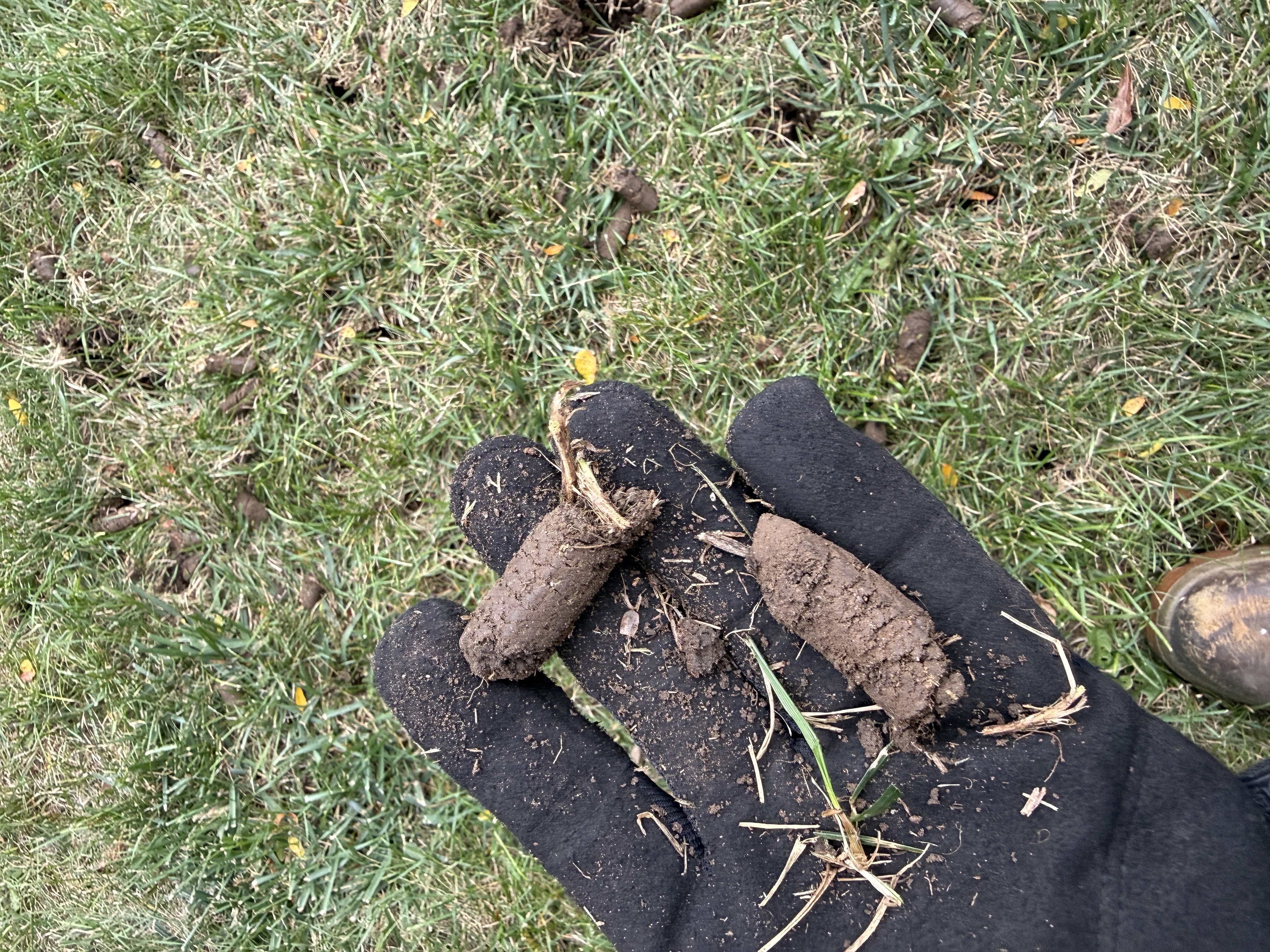 Core aeration creates openings throughout the lawn that help relieve compacted soil.
What Is Core Aeration?
Core aeration uses a machine equipped with hollow tines to remove small plugs of soil from your lawn. These plugs are commonly called cores.
Unlike spike aeration, which simply pushes into the soil, core aeration physically removes material from the ground. This creates additional space within compacted soil and allows air, water, and nutrients to move more easily into the root zone.
The soil plugs left behind after the service are completely normal. They should be left on the lawn, where they will gradually break apart naturally.
What Happens Below the Surface?
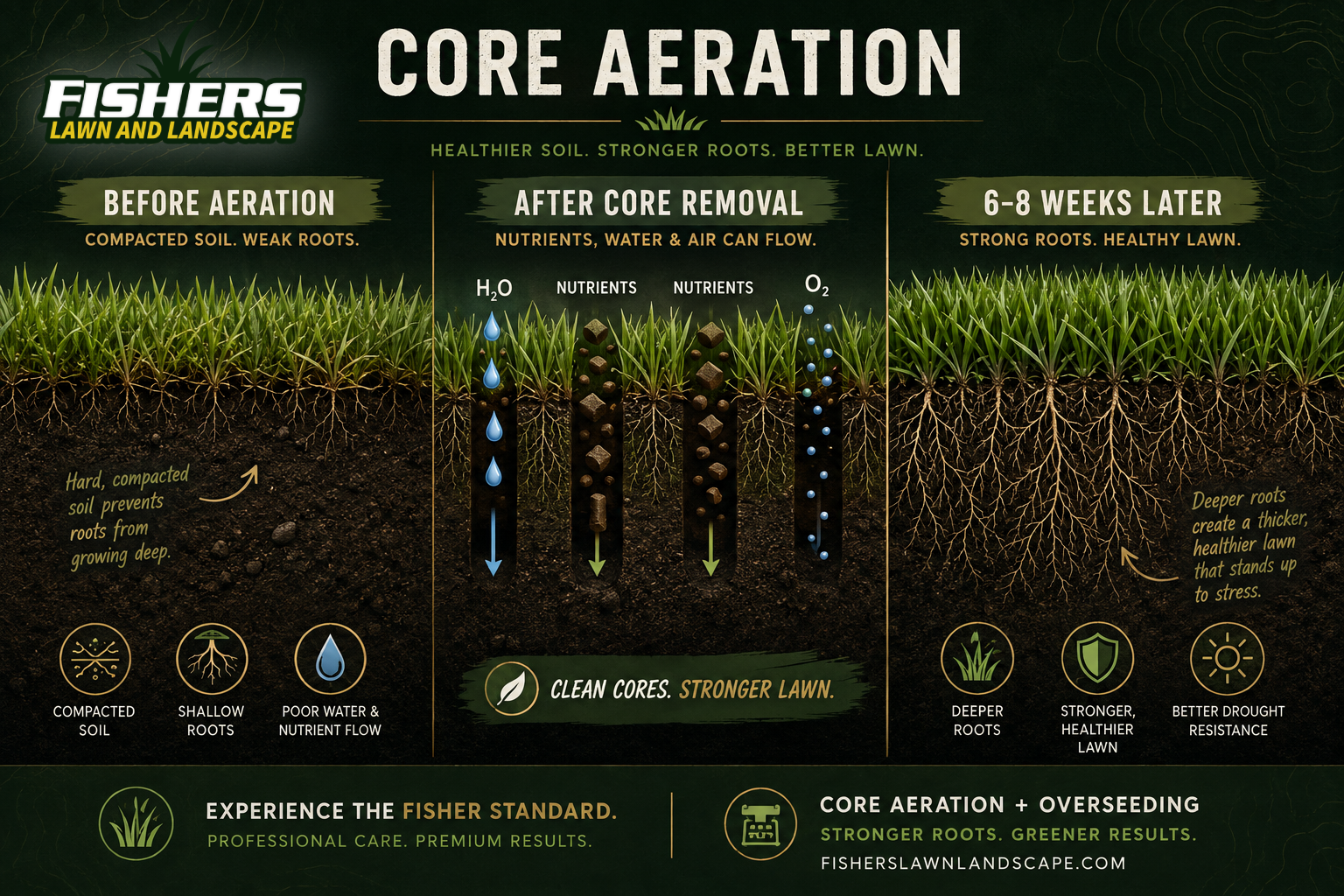
Benefits of Core Aeration
The main purpose of core aeration is to help relieve soil compaction, but the process can provide several benefits to an established lawn.
Relieves Compaction
Removing soil cores creates additional space within compacted soil and gives the root zone room to develop.
Improves Water Movement
The openings created during aeration can help water move into the soil instead of remaining primarily at the surface.
Supports Root Growth
Better soil conditions can encourage the development of a stronger and healthier root system.
Helps Manage Thatch
Aeration brings soil microorganisms into contact with the thatch layer and can help with thatch management.
Prepares for Seed
Aeration creates openings that can improve seed-to-soil contact when overseeding is performed afterward.
Improves Lawn Health
A healthier root environment helps give your existing turf better conditions for continued growth.
Why Pair Aeration With Overseeding?
Aeration helps improve the soil environment. Overseeding helps improve the turf growing above it.
Overseeding involves spreading new grass seed throughout an existing lawn. It can help fill thin areas, increase turf density, repair stressed areas, and introduce new grass into the existing lawn.
Immediately after core aeration is an excellent opportunity to overseed because the newly created openings help some of the seed reach the soil instead of simply resting on top of the existing grass and thatch.
Aeration + Overseeding = Better conditions for a thicker lawn.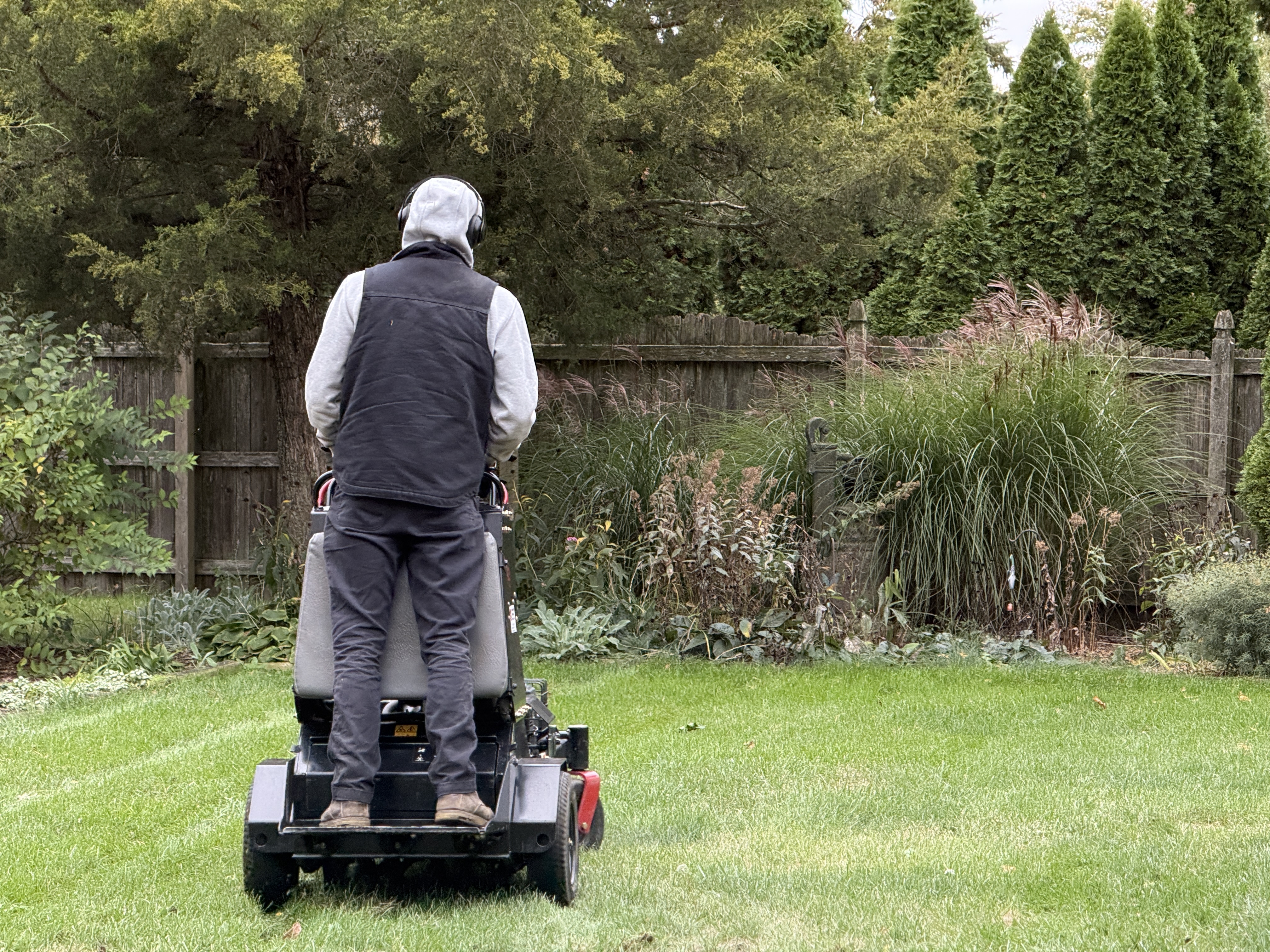
How Often Should You Aerate?
There is no single schedule that works for every lawn. How often your property should be aerated depends on factors such as soil type, traffic, lawn use, and the amount of compaction present.
Lawns with heavier soil or frequent foot and equipment traffic may benefit from more frequent aeration. For many properties where compaction is an ongoing issue, annual fall aeration can be a useful part of the lawn's maintenance program.
Quick Test
When your soil is moist, try pushing a screwdriver several inches into different areas of the lawn. If it is consistently difficult to push into the ground, your soil may be compacted.
Why Do We Aerate in the Fall?
Many lawns throughout Northern Illinois contain cool-season grasses. These grasses become more active again as temperatures begin cooling after the stress of summer.
That makes late summer and fall an important period for lawn recovery. Combining core aeration, overseeding, proper watering, and continued lawn maintenance can help establish stronger turf heading into the next growing season.
What Should You Do After Overseeding?
Watering is one of the most important parts of successful overseeding. Newly planted seed needs consistent moisture while it begins the germination process.
The goal is to keep the newly seeded areas moist without flooding the lawn or creating runoff. As the new grass becomes established, watering can gradually transition toward deeper and less frequent watering.
You should also leave the soil cores from aeration on the lawn. They will naturally break down over time.
Give Your Lawn a Stronger Start This Fall.
Fisher's Lawn & Landscape is now scheduling fall Core Aeration & Overseeding throughout Minooka and surrounding communities.
on your fall aeration or aeration & overseeding service.
Fall appointments are limited. Schedule early to reserve your property.
Request Your Quote